Few garments in fashion history have maintained relevance across decades quite like the leather jacket. Born from functionality and rebellion, elevated by cultural icons, and constantly reinterpreted by designers across generations, the leather jacket has cemented itself as more than just outerwear—it’s a symbol. A symbol of attitude, authenticity, and adaptability. From its early 20th-century utilitarian roots to the tailored silhouettes of high fashion runways, the leather jacket has walked a path few garments can rival: both classic and ever-evolving.
As fashion cycles spin faster and trends shift with seasonal rapidity, the leather jacket remains steadfast. What makes it so enduring? And more importantly, how are today’s designers updating this classic without sacrificing its edge? In this exploration of “Leather Jackets: Classics & Updates,” we uncover how this staple has not only stood the test of time but continues to evolve into the future—without losing its soul.
The Birth of a Legend: From Aviation to Attitude
The leather jacket wasn’t born in a fashion studio—it was engineered. Its origins trace back to the early 1900s when aviation pioneers and military pilots needed protective gear for the elements. The original “bomber jackets,” also known as flight jackets, were constructed with heavy-duty leather and shearling linings to keep pilots warm at high altitudes. These jackets prioritized function over flair, yet their silhouette—fitted at the waist, broad at the shoulders—would set the foundation for a century of iconic style.
The 1920s saw the debut of the now-infamous motorcycle jacket. Designed by Irving Schott and sold at Harley-Davidson dealerships, the “Perfecto” was rugged, belted, and built to withstand high-speed wind and road abrasion. It became the uniform of motorcyclists, but its appeal would soon explode far beyond utility.
By the 1950s, Hollywood helped immortalize the leather jacket as a symbol of rebellion. Marlon Brando in The Wild One and James Dean in Rebel Without a Cause transformed the Perfecto from practical gear into a cultural icon. Suddenly, wearing a leather jacket wasn’t about warmth—it was about cool. It represented defiance, youth, and danger.
Cultural Evolution: Music, Movements, and Subcultures
The 1970s and 1980s ushered in an explosion of subcultural ownership of the leather jacket. Punk rockers made it messy, anarchic, and spiked with personality—literally, with studs, patches, and DIY slogans. Vivienne Westwood and Malcolm McLaren’s boutiques in London were ground zero for this sartorial rebellion.
At the same time, heavy metal and glam rock musicians adopted leather as a uniform. Think Judas Priest’s black-on-black ensembles or the glam detailing of Mötley Crüe. Then came the minimalist leather jackets of the 1990s, worn by supermodels and pop stars alike—stripped of flair but rich in attitude. Kate Moss in a cropped black moto jacket over slip dresses came to define the “grunge glam” of the era.
In each era, the leather jacket adapted—but it never disappeared. That chameleonic quality is what makes it uniquely timeless.
The Leather Archetypes: Classic Forms That Persist
While the world of fashion is ever-changing, several archetypes of leather jackets remain as foundational pillars:
- The Motorcycle Jacket:
Short, asymmetrical zipper, wide lapels, often belted. The quintessential “rebel” jacket. It’s the go-to silhouette for edge and attitude. - The Bomber Jacket:
Originally military, now endlessly reinterpreted. Ribbed cuffs, relaxed fit, sometimes lined with shearling or faux-fur. Often more casual than the moto but no less iconic. - The Racer (Café Racer) Jacket:
Minimalist and sleek, typically with a band collar and straight zipper. Clean lines, less bulk, and built for speed—literally, for café racers in 1960s London. - The Flight Jacket:
A cousin of the bomber but heavier and often lined with shearling. It offers warmth, volume, and a commanding silhouette. - The Blazer/Trench Hybrid:
More recent but increasingly popular. Tailored like formalwear, these leather jackets borrow from classic tailoring—lapels, buttons, and longer lengths—blurring the line between coat and statement piece.
Material and Technique: Updates That Define the Present
What truly separates today’s leather jackets from their predecessors is not always the shape—but the material, texture, and detailing. With sustainability concerns on the rise, many labels are moving away from traditional animal leather and exploring innovative alternatives.
Vegan Leather:
No longer just PVC plastic, today’s faux leathers are crafted from mushroom mycelium, apple peels, cactus, and other bio-based materials. Brands like Stella McCartney and Nanushka are leading the charge with supple, eco-conscious options that rival traditional leather in look and feel.
Color and Finish:
Classic black still reigns, but designers are embracing bold experimentation. Think pistachio green, cherry red, or metallic silver. Washed, crinkled, patent, embossed—today’s leather comes in every finish imaginable, from matte minimalist to high-gloss futurism.
Patchwork and Texture Mixing:
Another key update is the incorporation of mixed materials—leather combined with denim, knit sleeves, corduroy panels, or even mesh. Patchwork leathers, often upcycled, add visual texture and sustainability credentials.
Oversized and Cropped Cuts:
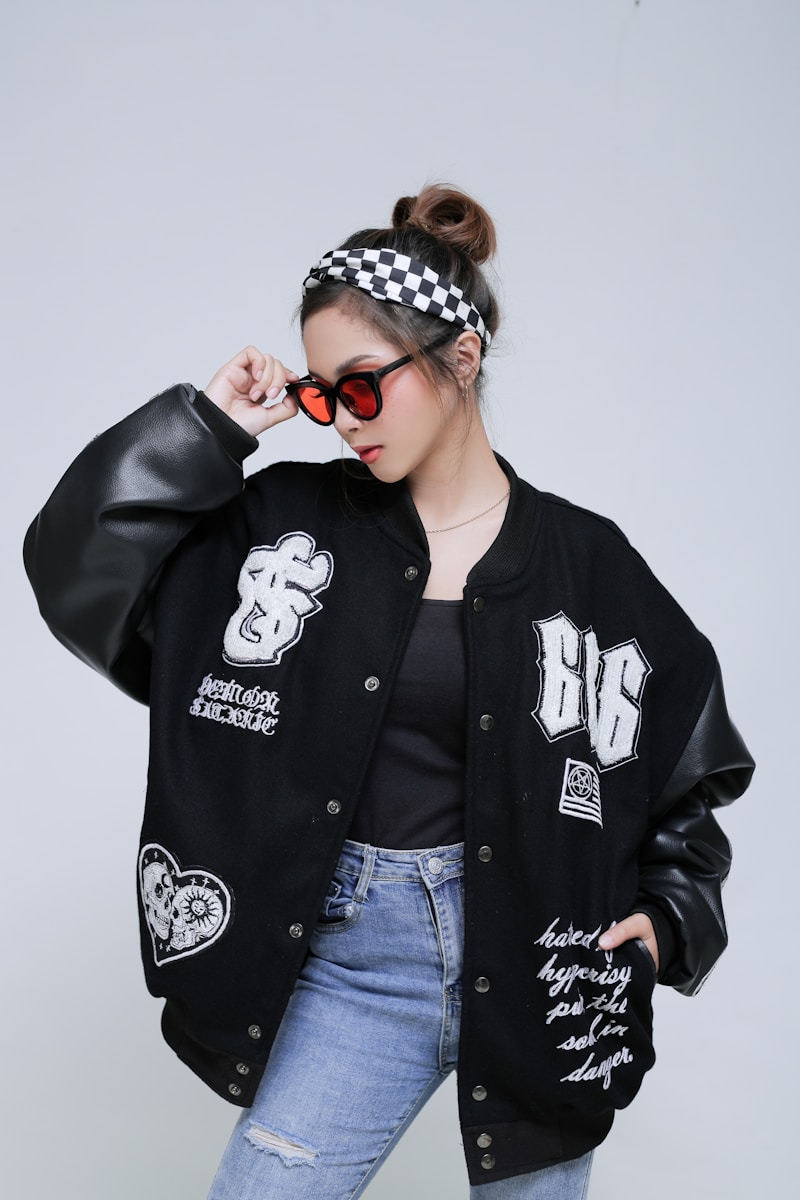
Silhouettes have stretched and shrunk. Oversized leather coats dominate runways—giving Matrix energy—while cropped bolero jackets nod to Y2K revivalism. This dimensional play ensures the leather jacket feels anything but static.
High Fashion Meets Streetwear: The Luxury Remix
Luxury designers have taken the leather jacket into new territory. Labels like Balenciaga, Saint Laurent, Rick Owens, and Acne Studios push the limits of proportion, styling the jacket in architectural or dystopian directions. Rick Owens’ exaggerated shoulders and elongated arms feel almost alien, while Saint Laurent’s sharp, cropped motos channel retro Parisian rock.
Streetwear has also added its spin. Brands like Off-White, Fear of God, and A-COLD-WALL* have infused street-coded graphics, branding, and layering techniques into leather garments. The result? Jackets that live at the intersection of subculture and luxury, beloved by both fashion insiders and sneakerheads.
The Genderless Appeal: Fluid Fashion in Leather
Traditionally marketed along masculine or feminine lines, the modern leather jacket has become refreshingly genderless. Oversized blazers, cinched biker jackets, and shapeless trench silhouettes are worn across the gender spectrum. Harry Styles might pair a sleek leather coat with pearls, while Zendaya dons a moto with combat boots and a slip dress.
This freedom in styling reinforces the leather jacket’s democratic appeal. It’s not about fitting into a category—it’s about how you wear it.
Styling in the Present: Versatility Meets Identity
The leather jacket today is as much about how it’s styled as the garment itself. A sleek black racer over a hoodie and cargo pants channels techwear. A belted vintage moto with a floral midi dress screams contrast chic. A colored leather trench over wide-leg trousers makes a high-fashion statement.
Layering is also key. Leather jackets are being worn under oversized wool coats, over sports bras, with balaclavas, or as part of coordinated sets. The possibilities are boundless—and that’s exactly the point.